A garage door is among the largest relocating systems in any kind of building, yet it is usually treated like an aesthetic upgrade. That is normally where trouble begins. A well-installed door needs to open up efficiently, seal snugly, stay peaceful, and hold its placement through countless cycles. A poorly installed one might still look fine on day one, however the signs show up promptly: uneven wear on rollers, noisy travel, early springtime tiredness, opener strain, and callbacks wherefore gets classified as garage door repair despite the fact that the root cause was installation.
Long-term efficiency does not originate from one costs part. It originates from the relationship in between the door areas, track geometry, spring sizing, opener selection, equipment quality, weather conditions, and the ability of the installer. In the area, I have actually seen fundamental steel doors last far longer than costly custom versions just since they were set plumb, well balanced correctly, and coupled with the appropriate hardware. I have actually also seen eye-catching new doors end up being persistent solution problems within a year due to the fact that somebody hurried the setup.
If you are planning a new garage door installation, or changing an aging system, it assists to understand what matters most prior to the very first brace goes on the jamb.
The setup stage chooses the life of the system
Most homeowners see style first. They compare panel styles, home window layouts, insulation scores, and color. Those selections issue, however the technicians matter much more. A garage door can evaluate anywhere from approximately 90 extra pounds for a light single non-insulated door to 300 extra pounds or even more for a dual shielded steel door, and much more for carriage-style timber or full-view commercial assemblies. Every extra pound needs to be managed by a springtime system, assisted by tracks, and managed by an opener or manual lift.
When installation is exact, the door relocates as a well balanced system. Rollers remain centered in the track. Joints articulate without binding. Base seals call the floor evenly. The opener acts like a guide rather than a lugging machine. That is what protects the components.
When installation is careless, each cycle compounds the trouble. A somewhat turned vertical track creates side lots on the rollers. A header bracket that is off-center can affect trolley traveling. Springs that are close sufficient, but not truly matched to the door weight, may allow the opener hide the discrepancy for a while. The owner just notices when the door starts slamming closed, turning around unexpectedly, or making a breaking noise near the torsion shaft. Then, the discussion frequently moves to property garage door repair or garage door spring substitute, yet those fixings might have been delayed by years with far better installation practices.
The opening itself needs to be ready before the door arrives
One of the most overlooked components of garage door installation is the opening. Installers often get blamed for healthy concerns that really started with framing, floor incline, or inadequate side space. Prior to picking the door and equipment, a person ought to verify the opening size and height, headroom above the opening, side clearance on both jambs, and backroom right into the garage. This is a lot more critical on older homes and in commercial rooms where wall surfaces might have moved or floorings might not be level.
A concrete flooring that drops half an inch from one side to the various other is common. It is convenient, but it changes exactly how the lower seal get in touches with the piece. In many cases, a larger astragal resolves it. In others, the appropriate solution is to trim or adjust the lower retainer, or established assumptions that the door can be weather-tight without appearing completely level to the eye. Great installers talk with these details as opposed to acting every opening is square.
Commercial work elevates the risks. With commercial garage door repair and substitute jobs, I have seen architectural steel columns that were slightly wrong and stonework openings that differed leading to bottom. If the installer presumes typical measurements without monitoring, track alignment endures quickly. A commercial door can still be made to run well, but just if dimensions are dealt with as component of the mechanical configuration, not as a formality.
Choosing the right door suggests thinking beyond visual appeal
Different door materials behave in different ways with time. Steel is preferred forever factor. It is sturdy, commonly readily available, and can use solid insulation worths when developed with polyurethane or polystyrene cores. Aluminum is lighter and helpful in some contemporary applications, especially where rust resistance issues. Timber delivers a distinctive look but requires much more maintenance and includes weight, which affects springing and opener requirements. Composite doors divided the distinction in some climates.
The appropriate option relies on usage, environment, and web traffic. A family that makes use of the garage as the main entry might run the door 6 to 10 cycles a day. Over a year, that can surpass 2,000 cycles. In 5 years, that is over 10,000. If the door faces straight afternoon sunlight, dark finishes may absorb significant heat. In cold regions, insulation and boundary securing matter much more, specifically if the garage shares walls with living area. In coastal settings, rust-resistant equipment and correct coatings are worth paying for.
This is where experience matters. A lightweight frying pan door may be fine for a detached storage space garage that opens a few times a week. The very same door would certainly be a bad choice for a warmed connected garage utilized day-to-day. Likewise, an extra-large wood-look insulated door might look excellent theoretically yet become a concern if the springtime system and opener are not chosen for that actual load.
Spring sizing is not an information, it is the heart of the system
Many solution calls that end in Garage door spring substitute trace back to spring mismatch from the first day. Springs are not compatible in the informal sense. They are selected based on the elevation, weight, track radius, drum kind, and desired cycle life of the door. A springtime system that is merely useful can still be wrong.
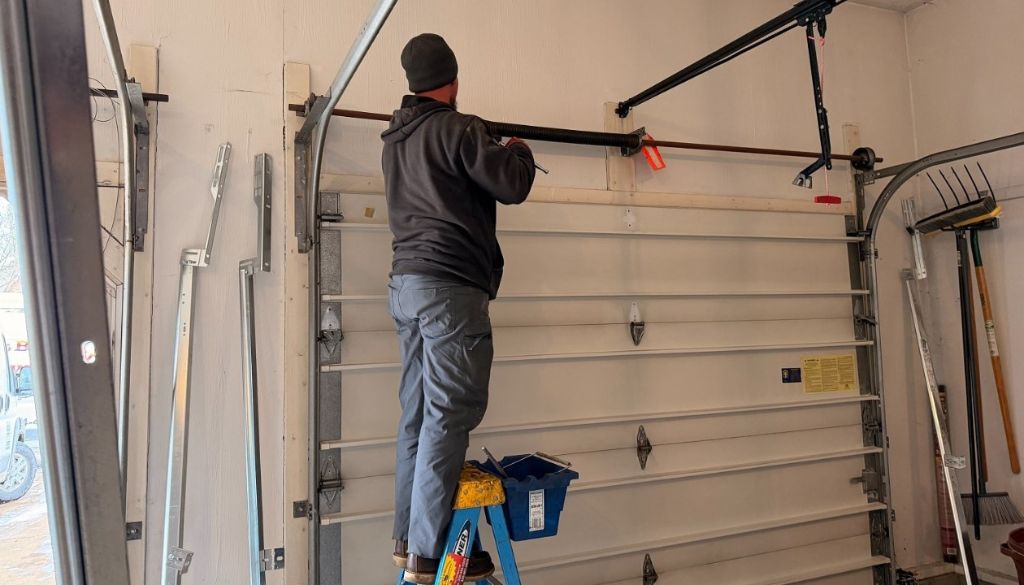
An appropriately well balanced door ought to stay near waist elevation when raised by hand and must not shoot upwards or wander down boldy. That balance safeguards the opener and makes the door safer to operate during power failures. If the installer makes use of springtimes that are undersized, the opener functions harder each cycle. If the springtimes are oversized or wound improperly, the door may become unpredictable at certain points of travel.
Torsion systems are typically favored for a lot of modern installations due to the fact that they provide smoother control and more predictable harmonizing than older expansion spring setups. That does not imply every torsion arrangement is equivalent. Cycle life matters. Criterion springtimes are often rated around 10,000 cycles, though choices exist for 20,000, 30,000, or a lot more. For a hectic household or an industrial site, updating springtime cycle life is often a better investment than spending added on attractive glass or trim.
I keep in mind a two-car family where both vehicle drivers parked within and one relative used the garage for a home gym. The door cycled far more than average. The builder-grade springtimes lasted simply under four years. We changed them with higher-cycle torsion springtimes, remedied the initial balance problem, and the driver instantly seemed much less strained. That is the sort of renovation people can hear.
Track placement and equipment top quality different silent doors from trouble doors
Noise is not always regarding the opener. A door that rattles, shudders, or bangs commonly experiences track or equipment issues. Vertical tracks must be plumb and set at the appropriate distance from the jamb. Horizontal tracks need the appropriate pitch to lug the door fully open without dragging or twisting. Flag braces, end bearing plates, hinges, and roller stems all need to interact without forcing the areas out of plane.
The most affordable equipment bundles have a tendency to show their weak point early. Thin hinges bend. Standard rollers wear quick, particularly if they use lower-grade bushings. Fasteners loosen up. Nylon rollers with closed bearings frequently run extra silently than standard steel rollers in property settings, though they still require to be matched to the door and track. On heavier industrial doors, longevity and tons handling normally take top priority over sound reduction.
If a new door is loud initially, something is wrong. New systems ought to seem regulated, not chaotic. A healthy setup creates a mechanical hum and rolling get in touch with noise, not clanks, stands out, and scratching. Those sounds almost always imply something is binding, loose, or misaligned.
The garage door opener must match the door, not just the budget
Consumers frequently buy the garage door opener by horsepower alone, yet that is just one item of the decision. Drive type, control reasoning, rail toughness, soft-start procedure, battery backup, and security attributes all matter. More important, the opener needs to never be used to compensate for a poorly balanced door. If the door really feels heavy by hand, mounting a stronger opener does not resolve the real issue.
Belt-drive drivers are a solid option for several affixed garages due to the fact that they run quietly. Chain-drive units stay trusted and economical, particularly where sound is much less of a concern. Jackshaft openers can be outstanding when ceiling area is minimal or when a tidy expenses layout is wanted, however they require suitable side-room and a correctly configured torsion system.
There is additionally a distinction in between occasional use and consistent demand. A domestic opener on a light dual door might do well for several years in a regular house. Put the same device on a much heavier protected door with regular biking and it might end up being a solution item rather. In light commercial setups, the wrong operator selection is a common reason for duplicated industrial garage door repair calls.
Smart features work, however they need to follow mechanical fundamentals. Remote monitoring, application controls, and cam combination are convenient. None of them matter if the rail bends, the force setups are wrong, or the safety turnaround is unreliable.
Weather securing is worthy of even more attention than it gets
Long-term performance is not only concerning training and lowering. It is additionally about just how the door handles water, dust, wind, temperature swings, and parasites. Great sealing beginnings with exact setup. If the door is not square in the opening, the side seals and top seal can just hide so much. The lower seal needs to fulfill the piece regularly across the full width.
Insulated doors can improve comfort, yet insulation alone does not create an effective barrier. Voids at the boundary reverse much of the advantage. In colder environments, poor sealing around the opening commonly creates homeowners to assume the door itself is malfunctioning, when the actual issue is in shape and perimeter treatment.
On commercial structures, seal efficiency comes to be even more crucial. Storehouses and service bays typically deal with wind pressure, forklift website traffic, dust, and duplicated opening cycles. The best base rubber, jamb seal, and track weather condition therapy can reduce wear and boost indoor conditions. It is much less costly to define them at setup than to review the opening numerous months later after problems start.
A couple of setup checkpoints that protect against expensive callbacks
The toughest installers have routines. They do the very same important checks every single time, also on regular jobs, since small misses out on develop huge headaches later.
Confirm the door balance by hand before counting on the opener. Verify track plumb, degree shifts, and appropriate clearances at complete travel. Test safety and security turnaround and photo-eye action more than once. Tighten and recheck all bolts after the initial cycles, especially on new framing. Inspect seal contact at the floor and perimeter with the door completely closed.None of these actions take very long. Skipping them can create weeks of aggravation. annual garage door maintenance I have seen a single loosened collection screw on a torsion part lead to a wandering cable television issue that looked, at first glimpse, like a spring failure. The installer who decreases for last checks generally conserves the consumer money and conserves the firm a return visit.
Residential and commercial work look similar from the visual, but they are not the very same work
People typically make use of the exact same language for all garage doors, yet the needs can be very various. Residential garage door repair generally involves comfort, benefit, safety and security, and modest cycle matters. Business garage door repair often entails safety compliance, automobile accessibility, inventory security, and much greater use patterns. The installation strategy needs to mirror that difference.
A household door can often focus on look and silent procedure. An industrial sectional door might require to focus on influence resistance, service, exposure, or speed. Equipment gauge, spring cycle ratings, track support, and driver duty course all adjustment accordingly. Even the upkeep expectations differ. Homeowners may call when something sounds wrong. Business managers usually need scheduled evaluation since downtime impacts operations immediately.
That is why item alternative can backfire. Using lighter household logic in a commercial opening might lower the in advance quote, yet it generally increases the lasting cost. The exact same concept uses in reverse. Overbuilding an easy detached property garage might not offer meaningful worth if the usage is reduced and the atmosphere is mild.
Early indication that factor back to setup issues
Some failures are just age-related. Others turn up due to the fact that the initial setup was off. When I examine a door within the first number of years after installation, a couple of signs and symptoms usually inform the story quickly.
- The door reverses near the flooring although the photo-eyes are tidy and aligned. One side of the lower seal presses much more than the other. Rollers show unequal wear patterns or ride hard versus one side of the track. The opener arm babbles or jerks during the very first few inches of travel. Cables shed even stress when the door is partly open.
Any one of these can come from part wear, however on newer systems they frequently signify that the door was never completely set. Great service professionals recognize the difference between a repair work that addresses the sign and a modification that fixes the cause.
Maintenance starts the day the door is installed
A brand-new garage door is not maintenance-free, whatever the pamphlet says. It may be low-maintenance, but relocating systems require periodic interest. The most effective time to clarify that is right after installment, when the proprietor can still see how the system is supposed to behave.
Homeowners should understand what normal sounds are, exactly how to evaluate the auto-reverse function, and when to call a specialist. Springs, cords, lower braces, and torsion elements need to not be dealt with as diy products. Fundamental treatment, such as keeping tracks devoid of particles, checking for loose joint screws, and organizing yearly solution, goes a long way.
The solution interval depends upon use. A lightly utilized domestic door may only require professional inspection yearly or every other year if it remains silent and well balanced. A high-cycle household needs to lean toward yearly check outs. Commercial doors frequently need a much more organized upkeep routine because the wear gathers faster and the repercussions of failure are greater.
Why the lowest installation bid usually costs more later
Price matters, however garage door setup is just one of those professions where economical labor often tends to announce itself later on. Reduced bids often hide concessions in hardware quality, spring cycle ranking, weather condition securing, debris removal, service warranty assistance, or the moment allocated for appropriate arrangement. The door might fluctuate on set up day, which develops the impact that all bids were equal. They seldom are.
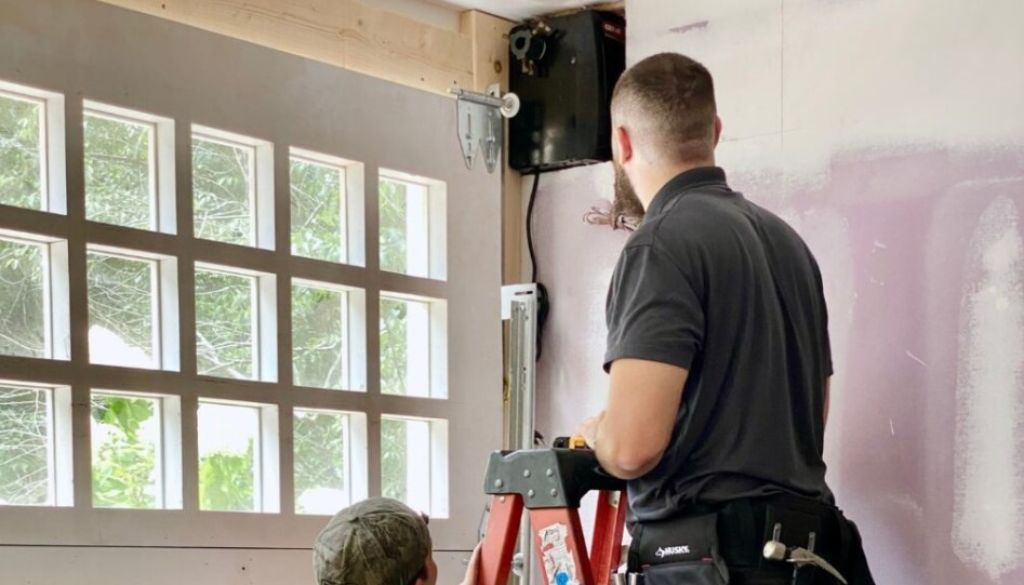
Ask what springs are being defined. Ask whether the quote includes reinforced struts if required, updated rollers, haul-away, seal replacement, and opener arrangement. Ask how balance is inspected and whether the crew adjusts for flooring variant. Experts that understand their craft can respond to those inquiries plainly.
The distinction between a typical mount and an exceptional one may only add a small amount to the initial invoice. Spread that over 10 or fifteen years of usage and it becomes one of the very best values in the job. This is especially real if it decreases the need for early garage door repair, shields the garage door opener from overload, and delays Garage door spring replacement.
What long-lasting efficiency actually looks like
People often assume success indicates a door that just does not break. The far better standard is a door that remains foreseeable. It should lift evenly, hold its balance, remain fairly quiet, stand up to seasonal shifts, and react well to routine service. It should not require consistent fine-tuning. Its opener must seem secure, not strained. Seals must proceed doing their work after weather changes. Hardware should show typical wear, not sped up damage.
That level of performance is not unexpected. It comes from precise measuring, thoughtful product choice, disciplined installment, and realistic upkeep. When all of those pieces align, the owner rarely thinks about the garage door, which is usually the most effective end result possible. It just works, year after year, the method an effectively mounted system should.