A garage door spring does not obtain much interest till the day it snaps, stretches out, or starts making the entire door really feel larger than it should. After that it becomes the only point any person wishes to speak about.
If you are attempting to make a decision between garage door spring replacement and repair work, the solution relies on more than whether the door still relocates. Springs wear gradually, often for many years, and the indication are not always remarkable. A door can open jagged, slam closed, stress the garage door opener, local garage door services Southport or make a loud bang that seems like something barged in the wall surface. In some homes, the spring falls short simultaneously. In others, it deteriorates simply sufficient to create a dangerous situation that looks safe at first glance.
The brief version is straightforward. Minor hardware issues around the spring system can often be fixed. The spring itself, as soon as broke, drastically extended, or near completion of its cycle life, is typically a substitute job. The trick is knowing where that line is, which matters due to the fact that guessing wrong can harm the door, wear out the opener, or place somebody in the course of a dropping panel.
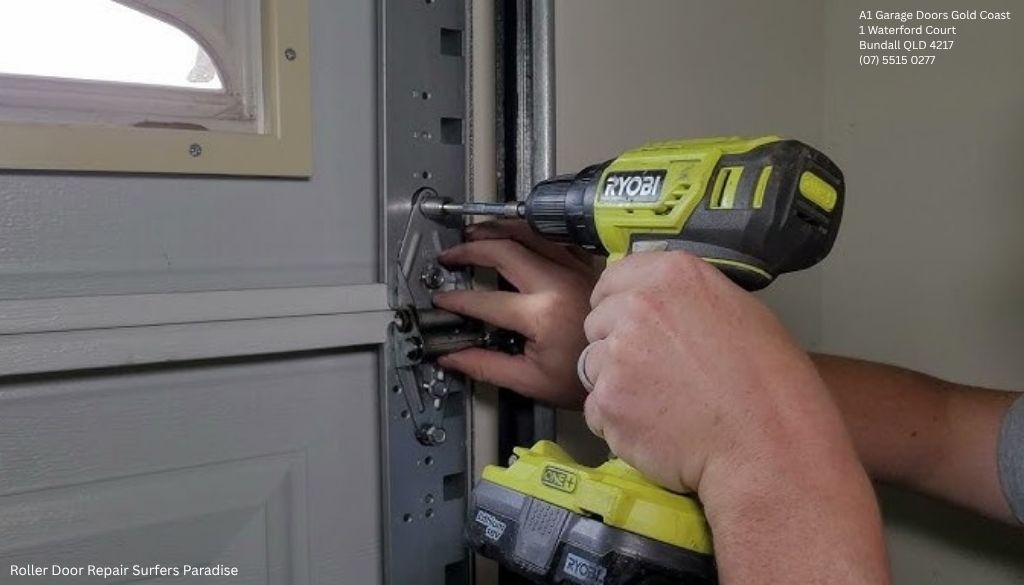
What the spring actually does
Most people assume the garage door opener lifts the door. It assists, yet the spring does the genuine heavy work. A conventional residential garage door can evaluate anywhere from 130 to greater than 300 extra pounds, depending on size, insulation, windows, and material. Larger custom-made timber doors can go much greater. The springtime system reverses that weight so the door feels convenient and relocates smoothly.
When the spring is healthy, you can usually lift the door by hand with consistent resistance. It should not shoot upward, and it must not crash down. It must stay near where you leave it if you stop halfway. That equilibrium is the entire point.
There are two common spring arrangements. Torsion springtimes install over the door opening on a shaft. Expansion springs leave the horizontal tracks on each side. Torsion systems are extra usual on newer installations because they have a tendency to run more smoothly and are typically much easier to tweak. Extension systems still show up typically, specifically in older homes and some spending plan setups.
In both instances, the springtime shops mechanical energy. That saved power is what makes this system efficient, and what makes it unsafe when taken care of incorrectly.
Repair and substitute are not the exact same decision
A lot of home owners use words repair service to imply any spring-related service phone call. In the area, that is not exactly how the job is typically separated. A true spring fixing typically suggests remedying an associated trouble without setting up a brand-new spring. That might include changing stress, replacing used bearing plates, resetting loose equipment, dealing with wire positioning, or taking care of braces that have actually changed under load.
If the springtime itself is broken, broken, badly corroded, noticeably gapped, or has actually lost enough tension that it can no more counterbalance the door securely, substitute is the appropriate step. Springs are wear elements. They are rated for a specific variety of cycles, with one cycle indicating the door opens up and closes once. Criterion springs are typically rated around 10,000 cycles, though higher-cycle alternatives are readily available and usually worth the additional cost.
A family that uses the garage as the primary entry can burn via cycles much faster than they expect. Four trips a day is not uncommon, which works out to about 1,400 cycles a year. Add teens, pet dog walks, bundle deliveries, lawn equipment, and weekend traffic, and the springtime ages quickly.
When a repair might be enough
Not every spring-related problem asks for full garage door spring replacement. There are situations where the springtime is still structurally audio, yet the system around it is refraining from doing its task correctly.
A torsion springtime can be out of change after various other parts put on down. Wires can come somewhat off track. Drums may change. Bearings can drag. A door that was as soon as stabilized can start to feel unpleasant or loud, even though the spring itself is still undamaged. In those circumstances, a skilled garage door repair specialist may have the ability to restore correct procedure with targeted service as opposed to replacing the spring.
This shows up usually after an influence. A driver nudges the lower panel. A ladder falls against a track. A roller starts binding and modifications exactly how the load travels via the system. The house owner notices the door looks unequal and assumes the springtime misbehaves. Often it is. Often the spring is fine and the door requires a track adjustment, cable television reset, or hardware tightening.
There is also a middle classification that triggers complication: the door works, but not well. It might open up slower than in the past, think twice near the flooring, or make the garage door opener audio stressed. That does not instantly suggest the springtime can be fixed. It does suggest the system should be evaluated before the opener gets damaged trying to compensate.
A common real-world instance is a door that begins to reverse on cool early mornings. Many individuals blame the opener sensing units, and occasionally that is appropriate. However I have actually additionally seen weak springs create enough added load that the opener interprets it as an obstruction. Readjusting pressure settings is not the appropriate fix if the door equilibrium is the actual problem.
When replacement is the ideal call
Once a springtime breaks, the discussion generally ends there. Replacement is needed. Springs do not obtain covered back together in any type of secure or long-term means. The very same uses when the spring is terribly warped, greatly rusted, or clearly nearing failure.
These are the most usual indications that point towards substitute:
- A visible gap in the torsion spring or a totally broken extension spring The door feels very hefty when lifted manually The opener strains, stalls, or lifts only a few inches The door bangs closed or will not remain halfway open One springtime has fallen short on a two-spring system, and the various other coincides age
That last factor deserves focus. If you have a two-spring torsion system and one spring breaks, changing both is typically the smarter decision. Springs in a set age with each other. If one has actually gotten to the end of its life, the 2nd is frequently stone's throw behind. Replacing just one can conserve cash today, but it often leads to a 2nd service phone call sooner than expected.
For business garage door repair, the replacement choice has a tendency to be much more simple. Commercial doors are much heavier, made use of a lot more frequently, and typically linked to distribution timetables, safety and security problems, or service accessibility. A marginal springtime in that atmosphere is not just a trouble. It is downtime. When cycle counts are high and the cost of disturbance is real, substitute is commonly the much more cost-effective option even prior to a full break occurs.
Why "it still opens up" is not a reputable test
Homeowners typically judge the door by one criterion: does it go up and down? That is easy to understand, but it misses exactly how the system really works.
I have seen doors with hazardously weak springs that still open since the garage door opener is doing job it was never developed to do. Openers guide and control movement. They are not implied to dead-lift a complete door continuously. If the spring is failing, the opener might maintain functioning for a while, especially if it is a strong belt-drive or chain-drive design. That does not imply the door is secure. It indicates another pricey element is currently under stress.
A strained opener can show up as jerky traveling, humming, delayed starts, or a rail that drinks greater than usual. In some cases the top section of the door bows somewhat throughout movement due to the fact that the opener is drawing against an out of balance load. In extreme instances, the electric motor burns out or the trolley setting up breaks.
This is one reason garage door repair ought to check out the system overall. A spring concern can impersonate as an opener problem, and an opener concern can distract from a failing springtime. The ideal medical diagnosis matters greater than the first symptom.
The age of the springtime matters more than lots of people think
A spring does not need to be damaged to be consumed. Gradually, steel exhaustions. Stress adjustments. Rust damages the coils. Even if the door still operates, an older springtime might no more provide the proper counterbalance.
This matters since older springs tend to fail at bothersome times. It is rarely throughout a tranquil Saturday mid-day when you are already cleaning the garage. Regularly it happens at 6:30 in the morning when somebody needs to leave for job, or throughout heavy weather condition when the door has been cycling more than usual.
If a springtime is near or beyond its predicted cycle life and the door is already revealing indicators of inequality, substitute makes more sense than trying to eject a couple of more months. That is specifically true if you are already spending for a solution visit. A little fixing on an exhausted spring system can end up being a short-term spot with a 2nd billing attached.
Cost versus value, what property owners must weigh
It is alluring to contrast repair work and replacement purely by cost. A minor adjustment or hardware improvement will normally cost much less than a complete spring substitute. Yet rate alone is not the best lens.
The better inquiry is value gradually. If the springtime is healthy and the issue is in other places, repair is the clever option. If the springtime is old, mismatched, harmed, or near failing, replacement is typically the better value even if the invoice is higher that day.
On residential garage door repair calls, I often tell individuals to take into consideration 3 points: age, balance, and usage. A newer springtime with a clear adjustment issue is a repair work discussion. An older spring on a greatly utilized household garage is often a substitute conversation. A holiday residential or commercial property with reduced cycle use may fall someplace in between.
Garage door setup additionally transforms the equation. If you are installing a new door, the spring system need to be matched to the door weight and anticipated usage. Reusing old or undersized springs to conserve a little cash up front commonly leads to loud operation, opener stress, and reduced service life. A correct setup is not just about fitting panels and tracks. It has to do with stabilizing the whole assembly.
Single springtime versus dual springtime systems
This is where a great deal of useful judgment is available in. A single-spring system has one evident replacement point. When it stops working, the selection is simple. On a two-spring system, house owners commonly ask whether both springtimes actually need to be altered if only one broke.
Technically, not always. Almost, often yes.
If both springs were mounted at the exact same time, have similar wear, and one has actually already broken, the 2nd is normally close behind. Replacing both restores even raising pressure and minimizes the chance of an additional failure in the near term. It additionally helps stop imbalance that can wear wires, rollers, and the opener.
There are exceptions. If one springtime was replaced just recently and the various other is more recent, replacing only the failed spring may be sensible. But mixed-age springtimes should be matched thoroughly for dimension and lift qualities. This is not a part of the system where approximate is excellent enough.
Safety is not an advertising and marketing line here
Some home repair work are forgiving. This one is not. Garage door springtimes are under high tension, and mistakes can be violent. A winding bar slipping from a torsion cone can trigger significant hand, face, or shoulder injuries. An expansion spring without proper control can release with frightening force.
Most homeowners fit transforming weather seal, tightening up noticeable screws, lubricating rollers, or screening security sensors. Springtime job is a different category. Even skilled basic handymen often avoid it unless they particularly handle doors.
A correct service phone call includes more than switching components. The specialist should verify spring sizing, inspect cords and drums, check the facility bearing and end bearings, analyze the lower brackets, examination equilibrium manually, and confirm that opener force and traveling are still appropriate after the door is rebalanced. That last part is typically forgotten. A recently well balanced door might need opener adjustments so the whole system functions together.
What an excellent service technician seeks on site
A springtime medical diagnosis need to not take ten seconds from the driveway. The visible break issues, yet so does the remainder of the system. A mindful technician generally checks a number of points before suggesting repair service or replacement:
- Door weight and size, consisting of whether the existing springtime is correctly matched Cycle wear, rust, and indications of steel exhaustion on the spring Cable condition, drum wear, and track alignment Opener stress, pressure settings, and traveling behavior Whether the second springtime or surrounding equipment is near failure
That wider evaluation is one factor specialist garage door repair frequently protects against bigger troubles. A spring may be the reason you called, yet used rollers, cracked hinges, or frayed cable televisions are what turn a routine issue right into an emergency a month later.
Residential and industrial requirements are different
Residential garage door repair normally revolves around comfort, safety, and safeguarding the opener and door areas from more damage. In a home, a failed springtime can trap autos inside, leave your home unsecured, or produce a loss hazard for youngsters and animals. The repair service method commonly balances prompt price with dependability for day-to-day household use.
Commercial garage door repair has a different pressure. Storehouses, solution bays, store front filling doors, and fleet structures rely on repeat biking and predictable gain access to. Springs on commercial doors typically carry larger loads and withstand a lot greater cycle counts. Downtime can indicate missed deliveries, labor hold-ups, or safety and security spaces. Because setup, changing aging springs before total failing is usually a sound operating choice, not an unnecessary upsell.
The very same logic relates to high-use household setups. If your household uses the garage as the main front door and the springtime is nearing the end of its life, a positive replacement can be sensible.
The role of the garage door opener after spring work
People are commonly stunned to find out that a garage door opener problem can vanish after spring replacement. That is because the opener was never ever real problem. It was resisting a door that had lost appropriate balance.
After any type of springtime service, the opener ought to be tested carefully. The door must relocate efficiently, reverse properly, and stay clear of jolting at the flooring or header. If the opener was stressed for some time, associated elements might still need focus. I have seen carts with used teeth, curved rails, and loose mounting brackets after months of making up for a weak spring.
This is likewise a good time to consider the larger picture. If the opener is older, louder than it ought to be, or lacking basic security and convenience functions, springtime substitute often ends up being the minute property owners likewise review an opener upgrade. Not since they must, but since the system is already being serviced and rebalanced.
A functional method to decide
If you are standing in the garage trying to determine whether you need a repair service or complete substitute, the deciding variables normally come down to condition, age, and efficiency. A springtime that is intact and correctly sized however affected by a neighboring equipment problem might be repairable. A springtime that is broken, worn down, severely rusted, mismatched, or clearly creating balance failing must be replaced.
There is no reward for getting every last day out of an exhausted spring. The disadvantage is too expensive. A damaged opener, a dropped door, a cars and truck caught inside, or an injury costs greater than a prompt replacement.
Good solution is not concerning pressing the bigger ticket. It is about matching the treatment to the actual condition of the door. Often that means a targeted garage door repair. Occasionally it suggests garage door spring substitute, ideally with both springs if they have actually aged together. And if the whole system is obsoleted or badly matched, it may even lead to a more comprehensive discussion concerning garage door setup and lasting reliability.
The best outcome is a door that lifts smoothly, stays balanced, and stops asking the opener to do function the spring should be dealing with. When that happens, the door gets quieter, much safer, and less expensive to have over time. That is usually exactly how you understand the best choice was made.